

Another Way to Live
How Building Beyond Began

“I know there has to be another way to live. But how?”
I’ve lost count of how many times people have said this to me. It might be about how to live in a tiny home. It might be about the ability to design a career outside of a 9-5. Whatever the specifics of the question, underneath is always the same: a feeling that the current structures aren’t working paired with the fear of what happens if we step outside them. And, for some reason, they think I have the answer.
I don’t have the answers, but I do have my own experiences.
People wanted to know how I built my tiny house and a tiny home community. How did I manage to live in the middle of the nation’s capital without a mortgage? The same questions came when I left my government job. How did I give up the security to work for myself? Then came the whispers after I shared stories of my ancestors visiting me, and of following guidance that made no rational sense to build something I couldn’t yet explain.
“I’ve had something similar happen,” they’ll say. “But I’ve never told anyone.”
More people carry these experiences quietly than we realize, waiting for the appropriate time to share them. I only learned this once I began sharing mine.
Asking for Direction
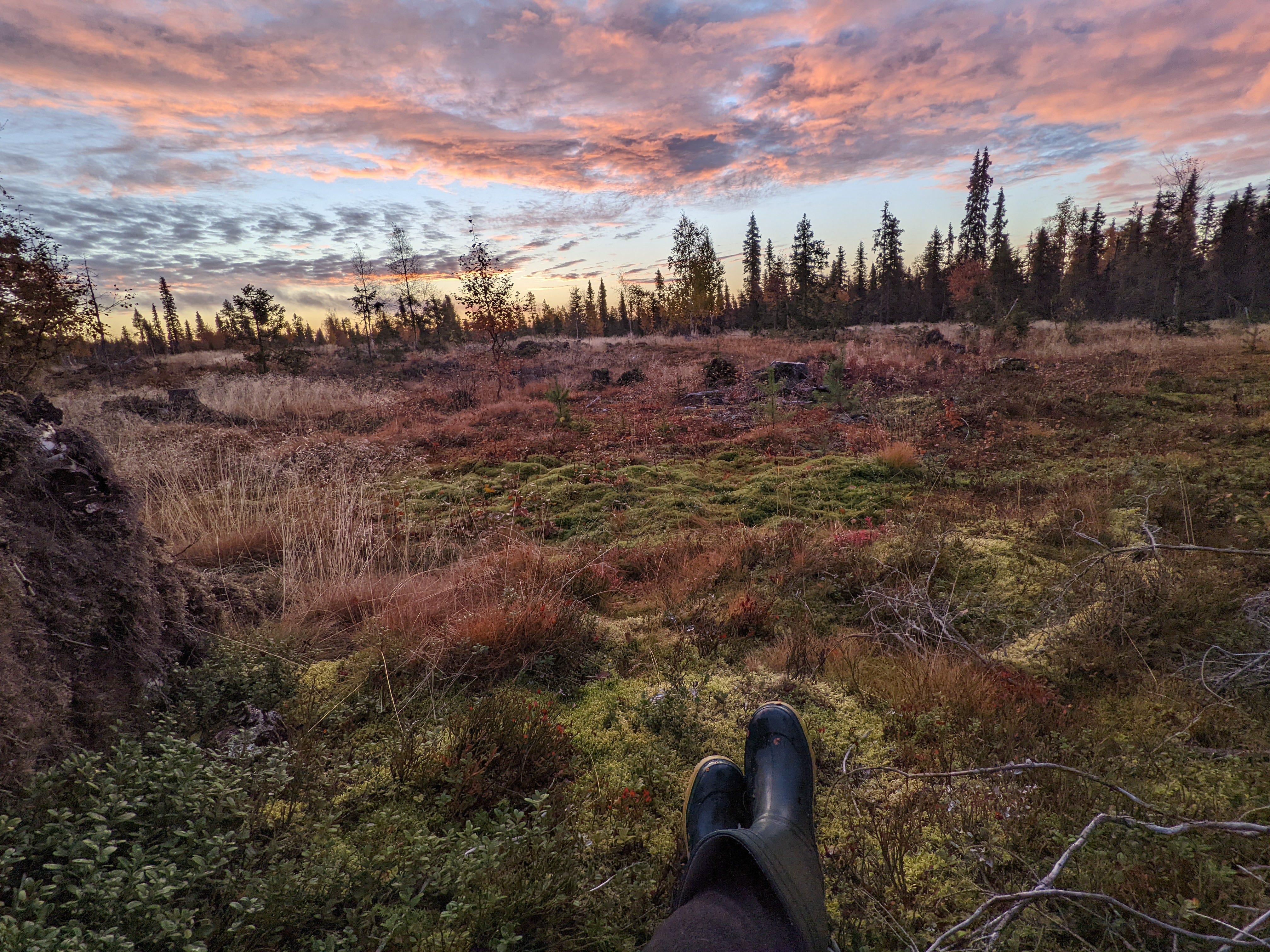
Four years ago, I was standing at a sacred site in the Arctic, in Sápmi (Finnish Lapland) asking my ancestors and the land for permission to do this work and for guidance on how to bring it forth.
I didn’t know exactly what “this work” was yet, but I knew it had something to do with with land, with community, and with helping people remember other ways of knowing and being on this Earth. And I had a sense, even though I desperately didn’t want it to be true, that it somehow involved emerging technology.
When I came back from that trip, the path started becoming clearer. But there’s a story as to how I ended up about as far north as you can go, asking my ancestors for direction.
It's Time to Listen
In early 2020, I was living in Mexico City when the pandemic hit. I’d come back to Mexico after losing two very important people in my life, my friend and co-founder of the tiny house community, Jay, and my mother, just six months apart. I’d gone to high school here in Mexico, my mom had worked here, and I was supposed to attend a celebration of life for her.
Right after the celebration of life, I was to return back to DC; however, that was early March 2020. Mexico still didn’t have a confirmed Covid case, but I knew I had to make a decision soon to return to DC or stay in Mexico.
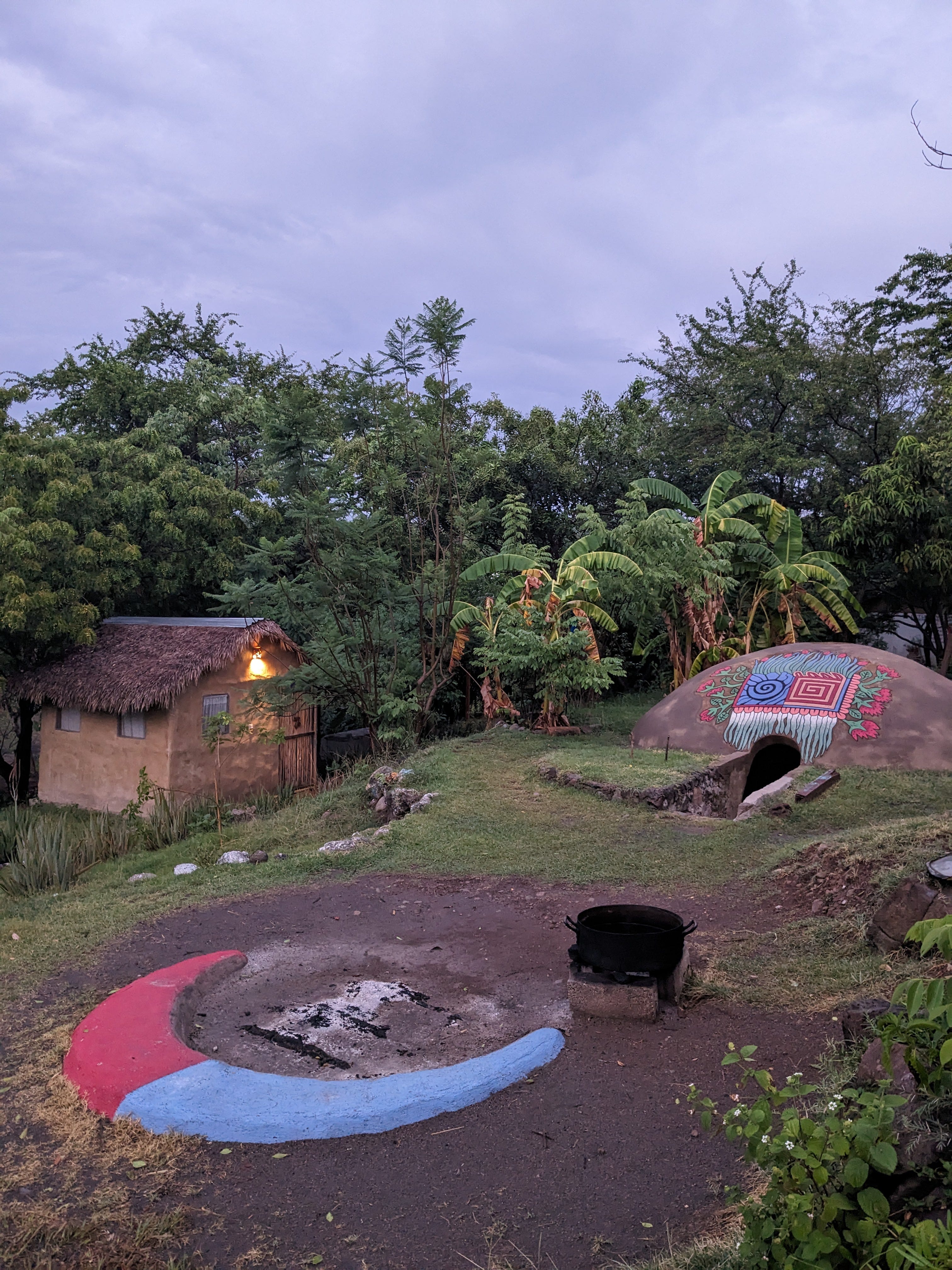
I didn’t know what I was going to do, so I called an abuela (elder) I knew who runs a small retreat center in rural Morelos. I just wanted to get into nature for a few days before deciding.
I got to her place, and I didn’t leave for four months, living with a few other women hunkered down there. Every night we’d sit around a fire, and on weekends, she would lead a temazcal.
One night around that fire, I felt my grandfather. He came up on my right side, and I heard his voice in my ear: “It’s time to listen. We have things to teach.” It was quick and to the point, and then he was gone. But I absolutely knew it was him, and it felt as real as if he were there in physical form.
A week later, in the temazcal, someone made a joke about her aunt asking if temazcal was anything like the sauna at the gym. Everyone laughed and said “nothing like it!” All of a sudden my grandpa’s voice, thundering and demanding, was all I could hear. “You need to tell them. Sauna is sacred!” Over and over. He wouldn’t let up, so I tapped the abuela on the shoulder. I was overcome with emotion. She turned around, looked at me, and said, “Don’t worry. We’ll work with him.”
And so we did.
Thank You for Coming Back
After that experience, I started working with a curandero (traditional healer) —someone skilled in navigating non-physical spaces, the dream and ancestral realms specifically. Ancestors started coming to me more regularly, in dreams and meditations, giving me information and snippets of stories. I’d write it all down, and then I’d verify what I received by looking it up in articles, books, or asking my dad. I’m still someone with scientific training, and I felt that I needed the “verification.”
Finally, after one powerful story given to me during a meditation that I later “verified” in an academic book, he asked me “Are you done searching for proof now? When will you finally accept that you remember and trust your knowing?”
Over and over, the elders and healers I was working with kept telling me the same thing: You should heed the call, go and visit your ancestral homelands.
But those ancestral homelands are in Lapland, way up north in the Arctic. My paternal grandparents’ families came from there. I’d known this my whole life, and was fortunate to grow up learning about their culture, but I’d never been. It was so far away, and I had no idea what I would do up there.
Yet as soon as I committed to going, everything fell into place. A $300 plane ticket. Invitations to stay with people. Meetings with distant relatives. An opportunity to work the reindeer roundup. A connection to a man who’s been remembering and teaching Sami spirituality. And many opportunities to learn.
When I got there, people would say the same thing to me: “Thank you for coming back.” People I didn’t even know. I found it a bit odd until I realized that rarely do relatives go back as most of us are at least one generation removed, if not many more, and it’s quite the journey to get there. One night in the fences during the reindeer roundup, a woman came up to me and said, “I heard one of your surnames is Muotka. You do know that name is only from up here, right? You don’t find it farther south. You belong here.”
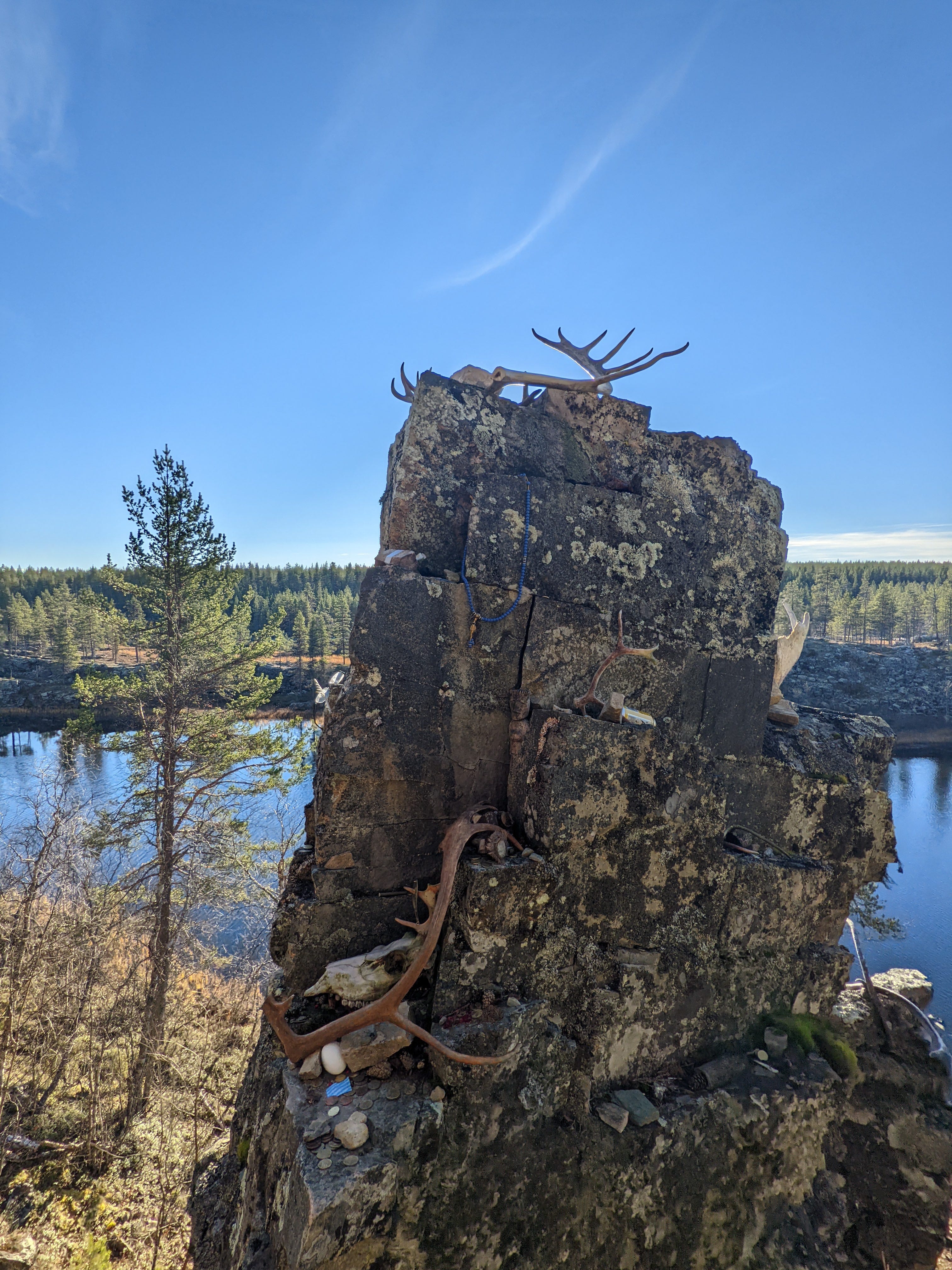
The land itself felt very familiar. There’s a reason most emigrants from that area ended up in the Upper Midwest. I went to sacred sites (seidas and lakes), and I asked for permission and for guidance on how to bring this work into the world.
Once I returned from Sápmi, the guidance came quickly: ancestral wisdom, community, land, and, of all things, video games. Some kind of gamified digital space where people could connect with their roots, with the land, and with other ways of knowing.
I was confused, and I’ll admit a bit upset. I thought I was done working in the tech industry. And I haven’t even played a video game since Mario Bros when I was a teenager. But the message was clear, even if I didn’t understand how to build it yet or with whom.
Permission, Protocol, Protection
A few months later, I went back to DC to sell my house and walked away from the life I’d constructed before. I knew couldn’t do this work from inside that life. So I returned to Mexico, the place where I had received so much guidance and acceptance around bridging these seemingly different worlds.
It was at this time that something else clicked into place. I’d been researching AI, reading about data sovereignty, and thinking about how we protect ourselves as the AI industry grows. And I started noticing how much of what I’d learned through ancestral work applied directly to technology.
When we do ancestral work, we ask permission before entering a space. There are protocols to follow, specific ways of engaging with respect and reciprocity. We set protection before we begin. These practices help us navigate realms that aren’t physical, where we can get lost or harmed if we’re not careful.
As I thought about the language – protection, protocol, permission – I realized it’s the same vocabulary we use in the tech industry. And I wondered why I wasn’t engaging in the digital realms the same way I do in other non-physical realms. With any technology that’s powerful enough to shape how we think and connect, we should be asking permission, setting protocols, and protecting ourselves and our data.
Here I had been trying to connect what I thought were two vastly different things—ancestral memory and emerging technology—rather than recognizing they are both non-physical realms that require similar navigational skills. As a geographer, it made sense why I would want to figure out the maps for these spaces.
One of my teachers once told me, “Lee, all we see in you is that you remember what it was like to walk on this Earth long before all of this.” Surprised, I said, “Of course, that’s why I’m a geographer!” I thought everyone could feel the land and its memories but we simply don’t talk about it because it’s so inherent in us. Why would we have to explain something we all know and feel?
I didn’t realize not everyone feels this. That realization was a big a-ha moment for me. For decades, anytime I’d visit a traditional healer who could see in other dimensions, they would all tell me some version of “I don’t understand why you’re not on this path, it’s wide open for you.” And every time, I would say “Thank you, I know, but I don’t think this is my work.” I always felt like I was letting them down in some way.
What I didn’t realize is that there are many ways to do “this work”—this work of building bridges across dimensions and various ways of knowing. I was stuck in binary thinking that I could either do the work I’d always done in the very material realm or I could do the work they do as healers in the spiritual realm. It took me a long time to see that the bridge itself is the work.
I know I’m not the only one who has grappled with how we build these bridges between various ways of knowing. So for others who do as well, where do they go?
I hope one of those places is Building Beyond.
So what is Building Beyond?
It’s a space for anyone who knows there are ways to live on this earth outside the current structures that constrain us.
For people who feel the call to remember and connect with their roots, their ancestors, and the land, but don’t know where to start or how to integrate that remembering within their day-to-day lives.
For people who want to build differently but keep running into the same walls: zoning that says you can’t, financing that doesn’t exist, people around you who tell you it isn’t practical.
For people who are tired of the creator economy that is built on individualism and extractive algorithms and want to build community economies and reciprocal revenue models.
For everyone feeling the call to ancient wisdom wanting to be brought forth in building new systems.
We’re creating a game where people can go on their own ancestral quests and see where their journeys link up with others. We’re building a network of community land stewards who are sharing skills, designs and resources and getting help to solve challenges on the land. We’re working with elders who want to share stories and knowledge, to engage youth where they’re at (online), and to help us through this transition.
And we’re doing it by asking permission, setting protocols, and building protection and reciprocity into the system. (More in future posts about our reciprocal data model and how we’re building).
For now I want to end where I started: with the whispers.
Every time I share this story, someone else has a story to share with me. They tell me about the dreams they’ve been having, the guidance they’ve received that they’ve never spoken about, the feeling that they’re supposed to be doing something different but they don’t know what.
There are more of us than we think. Those of us who feel the pull toward something we can’t explain yet, who know the old compass doesn’t work, who are preparing to step into our roles in the new worlds ready to emerge.
The path isn’t easy. If it was, we’d all be on it. It’s often lonely and confusing, but we are helping each other learn to navigate from a different compass, an inner one.
When I started my tiny house journey back in 2011, I didn’t know how to build anything. I found a builder and an architect, and I learned from them as I built. To not feel so alone in what many considered a crazy undertaking, I invited others along on the journey with us. Soon we had hundreds of people visiting every weekend, community work days, tiny house concert series, and many tiny home dwellers across the country who told me we inspired them to start building.
Fifteen years later, I’m now in a similar position. I have no idea how to build a video game, but we are working with game industry veterans who do and we are bridging worlds—the digital, the physical, the ancestral and spiritual—in order to see what new worlds can emerge as we remember and build together.
And once again, I’m extending the invite to join us on this journey. We’re tired of playing the old game, so I hope you’ll help us figure out a new one.